

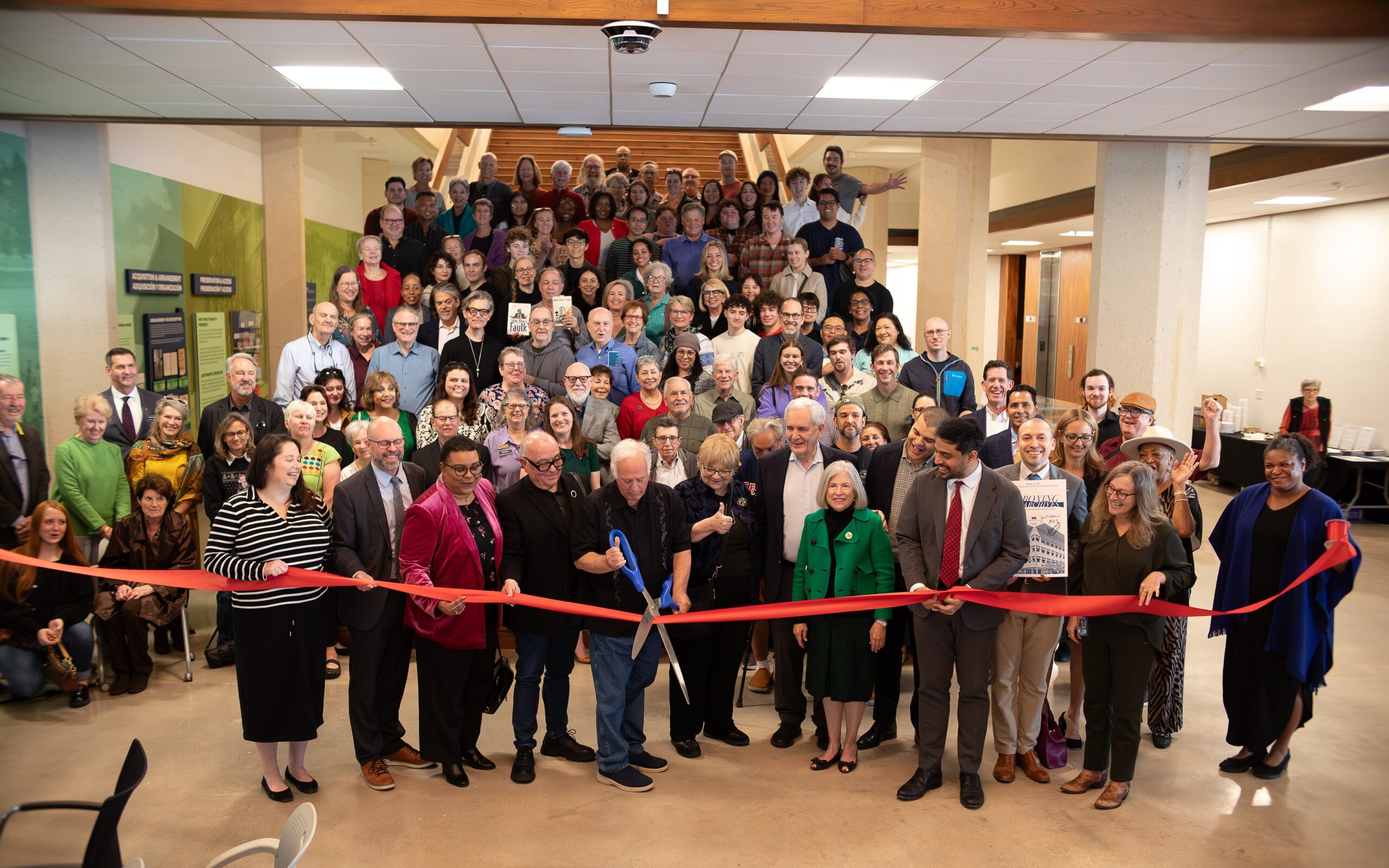
The Austin History Center Association hosted a grand re-opening celebration for the Austin History Center, located at 800 Guadalupe St., on Sunday, Dec. 7. The reopening marks eight years of work to modernize and preserve the John Henry Faulk Library Building. This renovation is part of a $14.5 million investment that brings new publicly accessible exhibit spaces, programmatic opportunities, and vastly expanded capacity for archival collections to Austin’s civic history resource.
The public ceremony in the Center’s lobby featured remarks from Austin Mayor Kirk Watson, Congressman Lloyd Doggett, and City Council Member Zo Qadri. The History Center’s Division Manager Jennifer Chenoweth, Austin History Center Association Executive Director Adam Powell, its Board President Charles Peveto, and others added comments. An open house followed the ribbon-cutting ceremony.
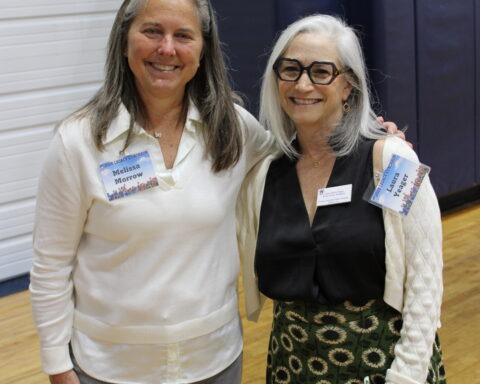
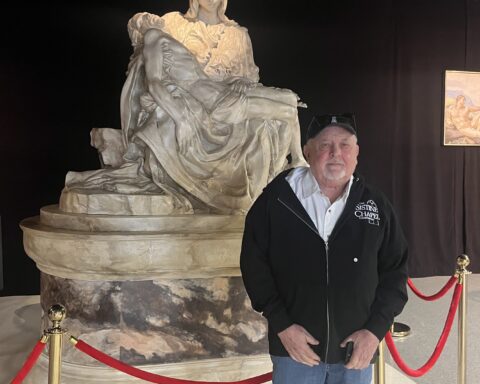
Many longtime, prominent Austinites, including Peggy Pickle, Sinclair Black, Martha Hartzog, Charles Betts, Bruce Elfant, Sue Meller, Ted Siff, Matt Curtis, Jesse Sublett, Joe Bryson, Kathie Tovo, and Mary Kahle, were among the guests.
AHCA Executive Director Adam Powell pointed out that the History Center sits at the center of a burgeoning historic district along Guadalupe St., stretching from the Heman Marion Sweatt Courthouse, through Wooldridge Square Park and the 1933 Library Building, to the Bremond Block to the south. He added that the Vision Plan being developed would bring this crown jewel district in downtown Austin to fruition.
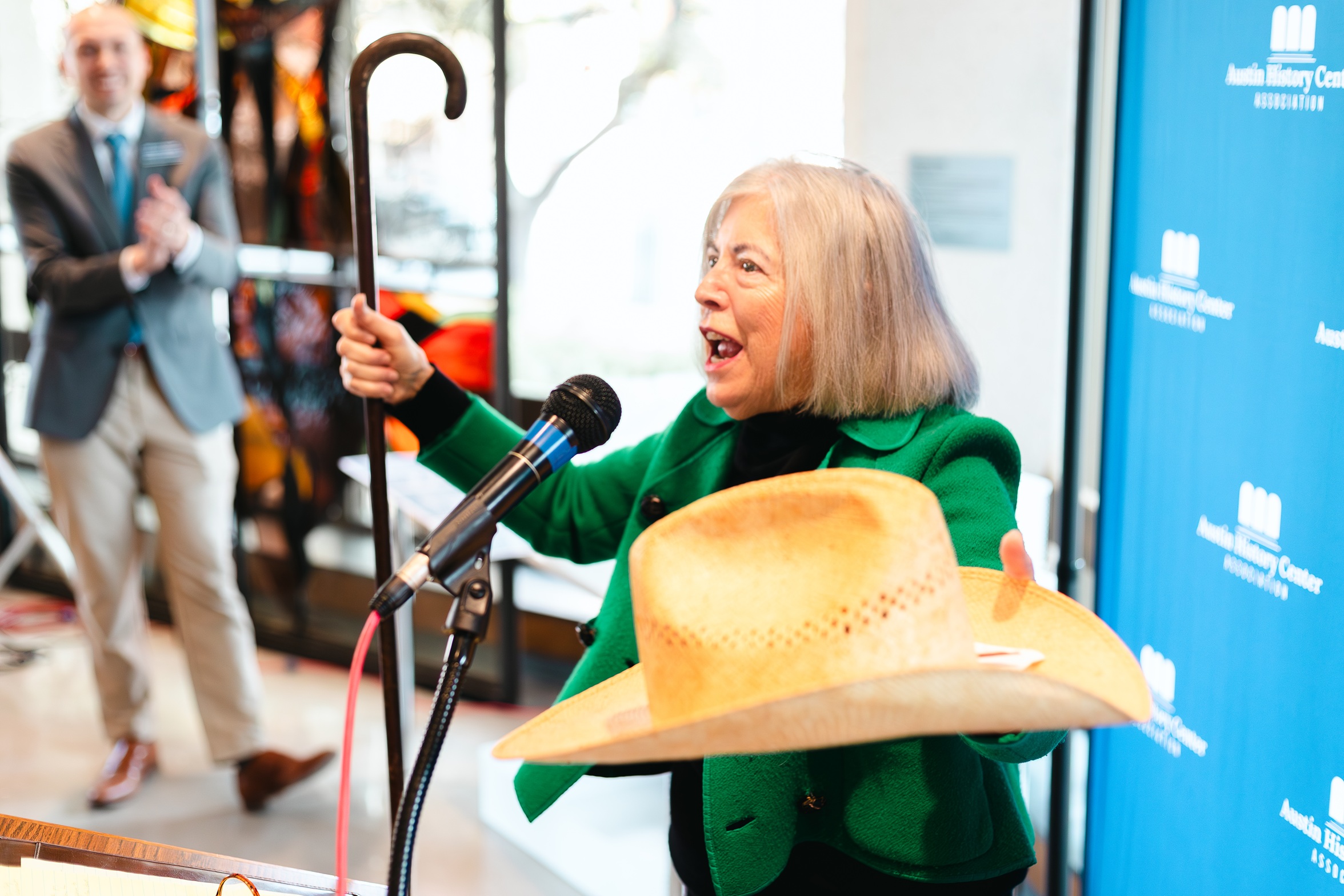
Judge Jan Patterson, a friend of the late John Henry Faulk, the namesake of the building that houses the History Center, added a special touch to the ceremony. She often walked along Lady Bird Lake with the renowned broadcast personality, listening to his reminiscences. In her speech, she recounted some of his stories, including his experiences during the McCarthy era, when he lost his CBS radio show and was later vindicated in court. Several members of the Faulk family were in attendance, including his widow, Liz.
“Austinites today and those generations that are coming need our city’s history preserved. The expansion of the Austin History Center into the John Henry Faulk Library Building ensures that it will happen,” Austin Mayor Kirk Watson said.
“The future of our dynamic international city is grounded in our history,” Congressman Lloyd Doggett said. “This newly renovated center expands our ability to keep Austin’s stories accessible, offering important context and insight as our city continues to grow and change.”
As part of the announcement, the Association also named its honorary chairs for the upcoming “Lighting the Fuse Funding the Future” Angelina Eberly Luncheon, the nonprofit’s annual signature fundraiser, scheduled for February 26 at the historic Austin Club. This year’s honorary chairs are Dan Bullock, Annette Carlozzi, and Nico Ramsey, each selected for their leadership and contributions to Austin’s cultural and philanthropic life. This event is organized through the Association’s Eberly Committee, co-chaired by Board President Charles Peveto and Community Leader Dee Hall.
The newly renovated Austin History Center is currently open to the public every Thursday, Friday, and Saturday from 12 p.m. to 5 p.m. To learn more about visiting the Austin History Center, visit their website at library.austintexas.gov/ahc
###
The Austin History Center Association has been the proud nonprofit partner of the Austin History Center for over 46 years. Its mission is to connect people to Austin’s culture by supporting the Austin History Center and sharing the diverse stories of our community, bridging past, present, and future. The Association is celebrating the start of a Vision Planning process with Steinberg Hart Architects and M. Goodwin Museum Planning Inc. to build future investments in the Austin History Center Campus.