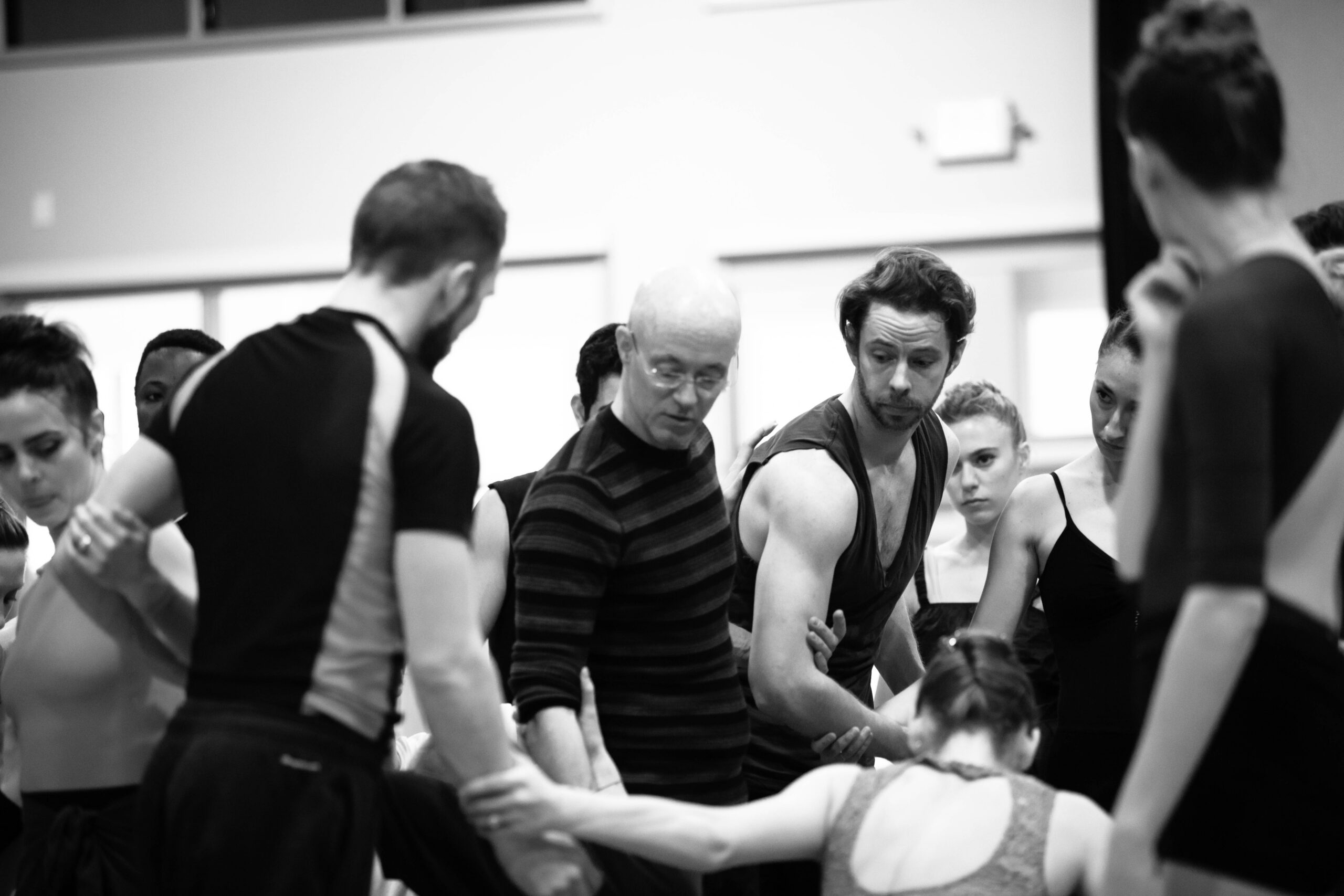



Maybe it’s my Austin-native bias, but I think that there is something particularly wide-ranging about our town’s brand of artistic endeavor and the people who stoke its creativity. For instance, take the work and the background of Northwest Hills resident Stephen Mills, now in his 25th season as Ballet Austin’s artistic director.
Here’s a man who was a classical pianist from age nine, acted in his high school theater troupe, majored in drama in college, took dance roles because he could handle them, signed up for Ballet 101 as a required course, obtained his first professional dance contract with the Harkness Ballet in NYC at 19 years old, and is now an internationally known choreographer.
It’s that eclectic background that enables him to stage exquisitely rendered versions of classics like Swan Lake, Giselle, and The Sleeping Beauty, and then turn around and create his most well-known work, Light / The Holocaust & Humanity Project (LIGHT), which premiered at Bass Concert Hall in April 2005. Using art, education, and community dialog to convene local conversations about the unlearned lessons from the Holocaust, LIGHT has since been licensed across the US and around the world. The Ballet Austin dancers were also invited to tour the work to three cities in Israel in 2013.
In 2000, his contemporary ballet Hamlet was his first new full-length production after becoming Ballet Austin’s artistic director. It features a compiled score of Philip Glass compositions and has now been licensed and performed by dance companies worldwide. The list goes on, but you get the idea.
It’s amazing to see how far the company has progressed since then. How did Stephen’s journey in the dance world start, and how did he come to Ballet Austin?
During the first part of his career as a dancer, Stephen performed with the world-renowned Harkness Ballet, the American Dance Machine under the direction of Lee Theodore, Cincinnati Ballet, and the Indianapolis Ballet Theatre. But all along, he had wanted to be a classical dancer and a ballet creator as well. In the summer of 1985, he heard about an audition at Ballet Austin. He took the opportunity, and he was given a contract. At that point, he enrolled in every composing class he could and constantly thought about ideas for dance works. Then, in 1987, Ballet Austin gave him a chance as resident choreographer, and in 2000, he was named artistic director.
Stephen agrees that his journey these past 25 years has been quite a ride. Starting in the antiquated firehouse on Guadalupe, with floors in the rehearsal rooms that some Ballet Austin board members helped to nail down, he now oversees a company with an international reputation. And the company’s home is The Butler Dance Education Center -- a two-story, modern facility in the heart of downtown Austin. As Stephen says, there is no situation in life in which one can imagine the possibilities of the future, least of all in the arts.
The company was a modest size 25 years ago, and it had little accessible repertoire to perform. So he began making work. Over that time span, Stephen has created more than 60 dances, both large and small, with and without narrative.
“When I began my career as a dancer, I was the most unlikely person to hold my position,” Stephen says. But now, having toured the world from China to Israel and to important venues in the United States, Ballet Austin, under his artistic leadership, is one of the most recognized companies in the country. “I am quite proud of our team members, both current and past, who have worked tirelessly to ensure we made a positive difference in our industry.”
His theory for both himself and Ballet Austin is to be authentic and to do meaningful work. In Stephen’s philosophy, success comes when a work’s creators are engaged in a way that engenders passion and enthusiasm.
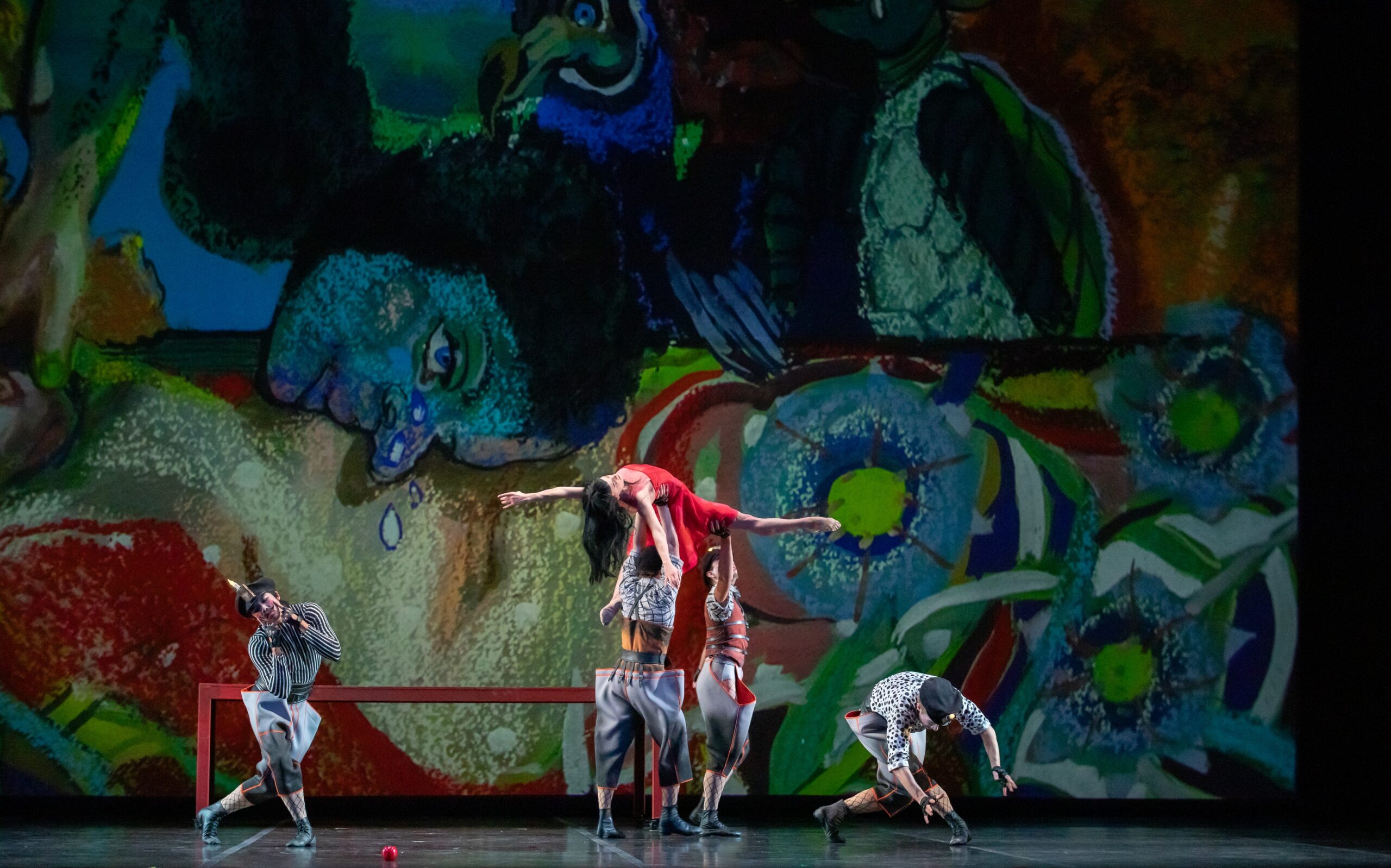
An example of that kind of involving creativity is the ballet being performed March 27-29, Marie Antoinette: Vampire Queen of Versailles. In this dance work, Mills injects the timeless tale of the teen queen of France with forbidden desire: a military man who offers earthly romance. Then the supernatural enters the story – a vampire who entices her with the intoxicating lure of power, immortality, and vengeance. Soon, the line between victim and villain blurs in a dramatic ending.
Magic Flute, his ballet set for May, also has a unique twist that heightens the drama. The plot is based on Mozart’s great opera -- a story of mystery, mischief, and secret societies. Mills’ variation on the piece is that the set is created using Cambodian shadow puppetry. The shadows set the environment, and become part of the storytelling. “I think this device creates a very ‘magical’ piece of theater,” Stephen says.
His goals for the company include deepening the artistic scope of the performers – engaging them in a collaborative process that helps them better understand themselves as artists. He adds, “I hope we are able to continue our outreach into the community so that young people can affirm that dance, music, and art are things that make for a rich life.”
This year, Ballet Austin will be honoring Stephen with a tribute at The Paramount Theatre on April 23rd. Artists like Graham Reynolds and Ray Benson will be part of the show, along with a special appearance by Ballet Austin Company dancers and BA TWO, and some surprises. Tickets are available at balletaustin.org.
In 1998, Stephen Mills won the choreographic honor of representing the United States with his work, Ashes, at the Rencontres Chorégraphiques Internationales de Seine Saint-Denis in Paris. In 2004, his work One / the body’s grace won the Steinberg Award, the top honor at le Festival des Arts de Saint-Sauveur International Choreographic Competition in Montreal.
Mills’ ballets are in the repertoires of Hong Kong Ballet, Ballet Augsburg, American Ballet Theatre Studio Company, Atlanta Ballet, Milwaukee Ballet, The Washington Ballet, Cuballet in Havana, Cuba, BalletMet Columbus, Dayton Ballet, Sarasota Ballet, Ballet Pacifica, Dallas Black Dance Theater, Louisville Ballet, Nashville Ballet, Colorado Ballet, Texas Ballet Theater, The Sacramento Ballet, Eugene Ballet, Oklahoma City Ballet, Pittsburgh Ballet Theatre and Dance Kaleidoscope.
He has collaborated with luminaries such as the nine-time Grammy Award-winning band Asleep at the Wheel, Shawn Colvin, visual artists Natalie Frank and Trenton Doyle Hancock, internationally renowned flamenco artist José Greco II, and composer Graham Reynolds. In 2020, Mills collaborated with filmmaker, producer, and former company artist Paul Michael Bloodgood to create the dance film Preludes/Beginnings, for which he received a 2021 Lone Star EMMY® Award.
Mills is a member of the national dance service organization Dance/USA and served both in leadership roles and on the national Board of Trustees for the organization. In 2013, he became a Fellow of the Chief Executive Program of National Arts Strategies.