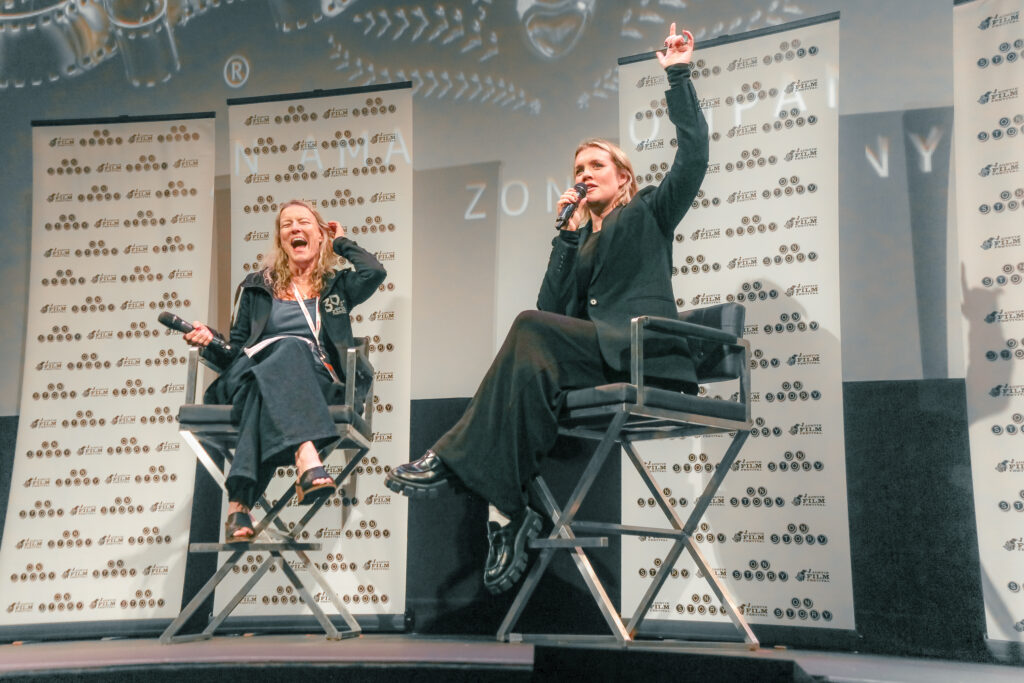


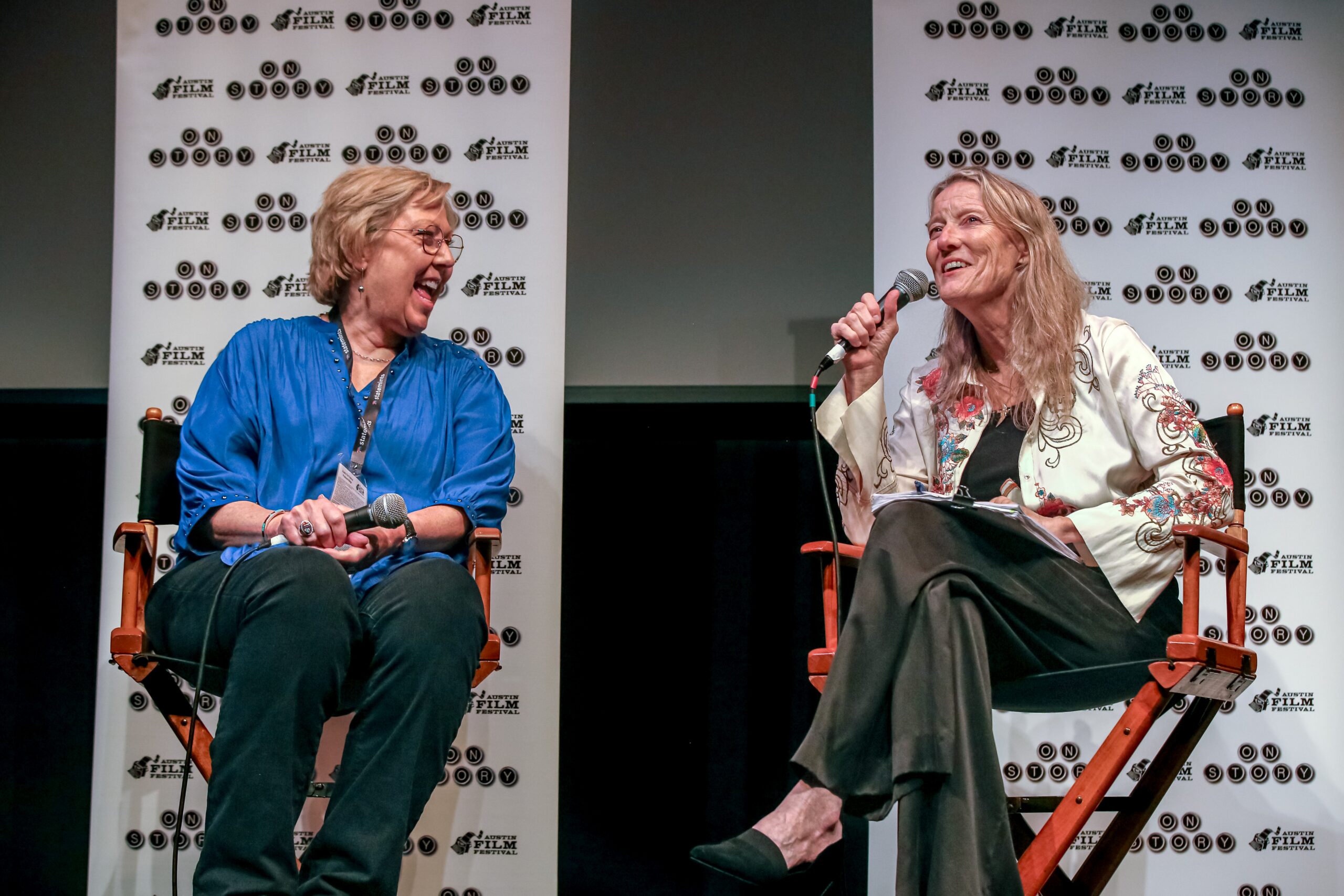
On a recent morning, I enjoyed a conversation with Barbara Morgan, Executive Director of The Austin Film Festival (AFF), in her corner office. Yes, it’s only fitting that this woman, who has led the festival to become the top event of its kind in the country, should have a location of importance in her business environs.
Heading into its 33rd year, the festival features screenwriters whose stories power the film and television entertainment industry and is one of the top US outlets for film premieres. Over 12,000 scripts and 6,000 films are submitted to AFF for judging each year. “On Story,” the Emmy Award-winning TV show featuring screenwriters that Barbara originated 15 years ago, is seen on 85% of PBS stations nationwide. The annual AFF Film and Food Party is one of Austin’s most popular fundraisers. AFF’s Ghost Ranch Retreat, held each year in New Mexico, is a sought-after spot for writers and filmmakers to hear professional talks and hone their craft. The festival’s Young Filmmakers Competition gives students ages 13-18 a chance to show their work to the world for free. And oh yes, Barbara and her management team oversee an army of 1,200 volunteers – around 600 of whom are active during the festival.
Now about that corner office – it’s the back bedroom of a 1950s house in a mixed-use neighborhood, two blocks east of I-35, south of Disch-Falk Field. As I sat there with Barbara, using a fold-up desk she provided for me, I told myself there couldn’t be anything more Austin-centric than this. I’m talking with the chief executive of a prominent national operation that is headquartered in a place that, well, doesn't look like 30 Rock. As she says, “This thing could never have happened anywhere else but Austin.”
Like many movers and shakers in this town, Barbara is skilled in several fields. She came to UT in 1979 to major in petroleum engineering. Then she moved into math. She began her career arranging financing for radio and television stations and dabbled in music management. In 1993, she had just finished making a broadcast station deal for a friend in the Panhandle. While they were having a meal, he asked her why there weren’t any mainstream film festivals in Austin.
A few weeks later, she was at a dinner party, and the topic came up again with the newly appointed Texas Film Commissioner in the room. Barbara asked her what it would take to make a festival happen, and the commissioner said, “Write a business plan and bring it to us.” Barbara did just that, and Governor Ann Richards saw it and liked it. Somehow, a Statesman reporter got wind of the idea and wrote a story about it.
Barbara quickly called Marsha Milam, a marketing expert and event planner, to bring her into the loop. Then Fred Miller, a national-level film producer and Marsha’s neighbor, asked if they’d like to go have drinks and chat about the plans of making the festival bigger than just Austin. After some discussion, Fred tossed out the key idea: to center the event around screenwriters rather than just showing films and bringing in big-name directors. Barbara went to a pay telephone and called well-known screenwriter Al Reinert in Houston to ask if he’d appear at the event. He agreed and provided a contact for his writing partner, Bill Broyles. Then Barbara’s good friend Robert Draper brought in Bill Wittliff. Having this core group of all-star writers was crucial. “I believe in kismet,” Barbara says.
She adds that if they had just made it a film festival, the business model wouldn’t have worked. “There’s no way to make enough money from just showing films.” Then she had the idea to solicit scripts for judging and awards, thereby bringing more of the spotlight onto that part of the film industry. The first year, 1,200 scripts were submitted for appraisal. Now they receive around ten times that many each year. To say the least, it's challenging to get the scripts read, but they have built the process up over time, and it is efficient.
Barbara soon found out that the writers – even at the top level of the profession – were often dismissed by the very industry they helped forge. Writers were not usually invited to premieres, and no one had ever produced a festival that invited them to speak. At the first AFF in October 1994, they had six Oscar-nominated writers attend who participated in panel discussions. Things caught fire in a hurry. One of the winning scripts submitted that year, Excess Baggage, was bought by Columbia Pictures. That was another spark that drew attention to them and let the film industry know this festival would be important.
In 2000, they expanded the festival's scope to include television writers. David Chase (The Sopranos) was among the first group AFF welcomed that year. Barbara says that many people in the film business thought TV writing was a lunchpail job. But actually, it was the area of the industry's largest expansion, and it added to AFF’s profit stream.
Unlike other festivals that keep trying to do the “film, movie stars, and directors” model, AFF has the framework to keep succeeding. The biggest challenge they face is the high cost of making any event in Austin work. Tech people are moving here by the thousands, and they don’t care about events that have been around for decades. It’s a cultural shift. In spite of all that, last year’s festival was a success, and plenty of people from Los Angeles and other film centers came, enjoyed the screenings, and had a great time.
One thing that is helping is that the state has re-upped incentives to film here, to the tune of $1.2 billion, largely thanks to two young people, Grant Woods and Chase Musselwhite, who conceived the plan and pushed it through the legislature. That has been a godsend. And there are forces like Taylor Sheridan’s (Yellowstone) producing work here in Texas that are catalysts for more positive things.
One way the festival has kept its brand vibrant and expanded its reach is through On Story, its national TV show, currently launching its 16th season. Again, it was kismet that made this juggernaut happen. Not long after the turn of the century, Barbara was having lunch with Bill Stotesbery, KLRU’s CEO, and she mentioned all the footage they had in storage from writers’ panels. Bill asked if she could produce a sample show for him to see. Barbara and her staff did just that and gave it to him. He viewed it and quickly asked, “How many more can you do?” KLRU wound up airing 12 episodes, and then Bill put the shows out on the PBS national system (NETA) to see who else would pick them up.
Barbara still remembers the call she received when Bill said that they’d been adopted by eight stations, including San Francisco. Soon, 20 stations started airing it, and now they produce 15 new shows a year, which are aired on PBS stations nationwide, including 23 of the top 25 markets. This exposure is a major driver of the AFF brand, and it has led to a massive increase in badge sales and attention from prominent writers. They also produce 24 podcasts and radio shows a year, giving students a chance to edit the pieces and gain valuable training.
They do other things to keep the festival fresh as well. Their Ghost Ranch Retreat lets them connect, up close and personal, with their core constituency of writers, filmmakers, and many audience members. And the Young Filmmakers Competition provides a look into the generation ready to emerge.
Barbara says, “Keeping AFF going for thirty-three years is a tremendous accomplishment. It’s easy to be complacent, and we can’t let that happen.”