


By Forrest Preece
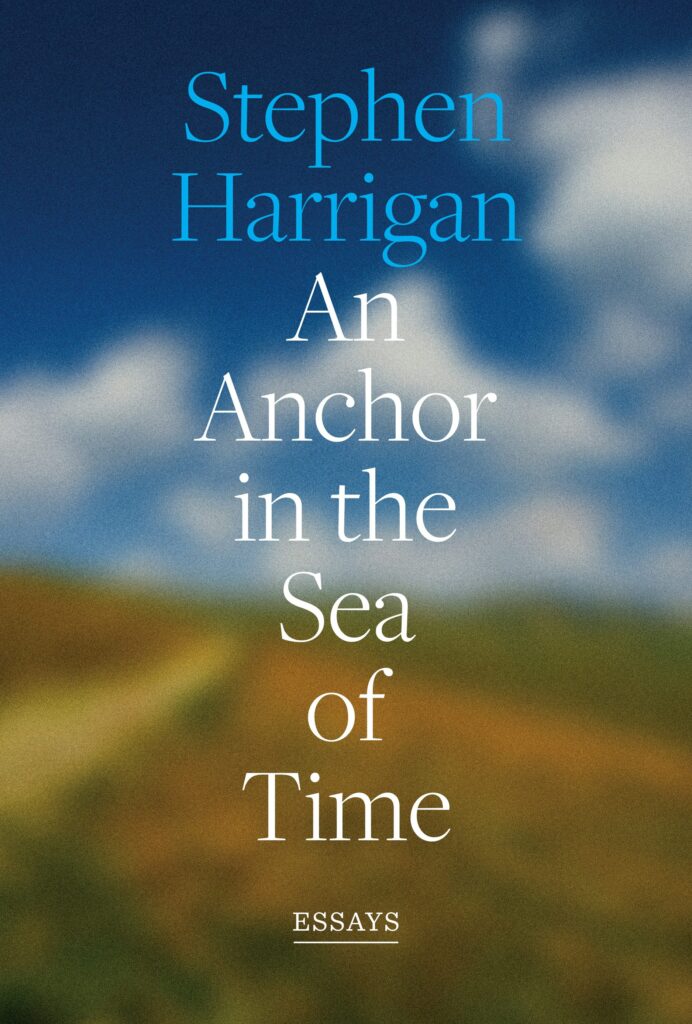
I’m such a fan of Stephen Harrigan’s writing that if he copied names out of a phone directory, I’d parse through them for some meaning. So when I saw that “An Anchor in the Sea of Time,” a collection of his essays, had been published, I grabbed a copy off the stack at my favorite bookstore and headed home to savor it. All the pieces in this book were originally published in Texas Monthly, except for one which appeared in Alcalde, the UT alumni magazine. I suppose that if I had been willing to spend an afternoon searching online for all these works, I could have done so. However, even after I found them, it would have required a considerable effort on my part to arrange them into a thematic whole. And why bother when the author has done such an artful job of it?
As Stephen writes in the introduction, we all know the feeling of time passing, and this book reflects “a personal chronicle set against a background of shared experience.” I submit to you here a select listing of the works, and you can see how they merge, moving from personal experience into stories that attracted public attention.
The first story is about the father that he never knew. Six months before Stephen was born, his dad was piloting an Air Force plane which crashed into a mountain near Seattle. The rest of Stephen’s life, the tragic story haunted him. Like he says, ours wasn’t a generation where grief counselors had been invented, and it would have been unseemly for him to pepper his mother with questions about the tragedy. But in his later years, Stephen went on a quest to the Seattle area to meet with relatives of his father’s crewmates and see the site of the crash. The result is a gripping account of filling in the details of an intensely personal mystery, and the reader is carried along with the revelations.
Moving to stories that the public also experienced, Stephen recounts how Gunnar Hansen, one of his roommates in his UT days, became known to the world as Leatherface in The Texas Chain Saw Massacre. For his acting efforts, which became the movie’s trademark, he received $800 plus some paltry royalties. Stephen also recounts how his future wife and Gunnar’s date fled the theater after witnessing a particularly horrific scene.
Another person Stephen met in that apartment was John White, an All-American boy if there ever was one, who was killed along with his girlfriend, Keitha Morris, in a murder/kidnapping that shocked the UT community in 1969. His piece on that incident is another of Stephen’s journalistic efforts that puts the reader at the heart of the investigation and revisits the crime’s impact on Austin. (How well I remember that awful event, the hot topic on campus for many days after it happened.)
Then there is a story about Stephen’s research into the Alamo’s restoration and preservation, complete with detailed accounts and insights into the politics involved in making it all happen. You’ll also read the story of the seminal days of Texas Monthly, where Stephen was one of the first writers; how a painting in his grandparents’ home turned out to be one of the startling finds like you see on Antiques Roadshow; and a poignant tale of his helping lead a Flying Longhorns group to modern-day Vietnam and the jarring range of feelings that journey engendered.
Among all 14 of these gems, the most impactful piece for me was “The Voice in the Tree,” which explores some of the signposts in his life that later defined his identity. In Stephen’s straightforward style detailing specific events, he ponders who he is, where he fits in, and the mystery that still surrounds those questions, even in his seventies. I’d imagine anyone who reads this essay will dredge up their own markers of self-awareness.
This book is a Whitman’s Sampler of treats by one of the stars of the West Austin School of Writers. I highly recommend you pick up a copy.