


Rena Pederson
She’s been nominated for a Pulitzer, is on the Pulitzer board, has written five books, and spent 40 years at the Dallas Morning News. She is a legend in Dallas journalism and has been named one of the most powerful women in Texas. She has interviewed world leaders, ridden on Air Force One with President George H.W. Bush, and had assignments in Iraq and Afghanistan. No doubt, West Austinite Rena Pederson could look back on it all, put down her pens, close her laptop, and spend a lot of time with her grandkids. But she’s doing research for a new book, which she promises will have some surprises.
Like a lot of people I’ve interviewed, she set her career course early. As a grade-schooler in San Angelo, she asked her parents for a hand-crank printing device and started her own neighborhood newspaper to share with friends. Her first byline was a story headlined “Fluff the Cat Is Dead.”
By the time she was in high school, she was writing a Teen Beat column for the San Angelo Standard-Times, and then was on the police beat. She didn't have a car, so when the police wanted to get her attention, they’d just drive up and honk. Her favorite officer was a big man called “Twinkletoes,” and he’d take her to crime scenes. One memory still haunts her -- when she was a junior in high school, she saw her first dead body while doing a story – someone had fallen into the Concho River and drowned. “It was a lot more interesting than hanging out at the Dairy Queen,” she says.
While she attended UT in the 1960s, she wrote for The Daily Texan and then landed a job working for the San Antonio Express-News Capitol Bureau. “I’ve worked for newspapers most of my life,” Rena says.
Then it was on to Columbia University in New York City for graduate school, where she worked two, and sometimes three, jobs to make ends meet. She says it was a culture shock to be there dressed in her Texas-girl matching outfits when the other women had long hair and Vassar pedigrees.
After grad school, she came to Dallas, where she first worked for United Press International and then the Associated Press. After a stint in Washington, D.C., with the Houston Chronicle, she started her 40-year career with the Dallas Morning News. In her four decades at the paper, she worked on every section except for sports. For 16 eventful years, she was the editorial page editor. “I’ve talked with some of my colleagues from that era, and we agree that we were glad to have been there when working on a newspaper was so much fun.”
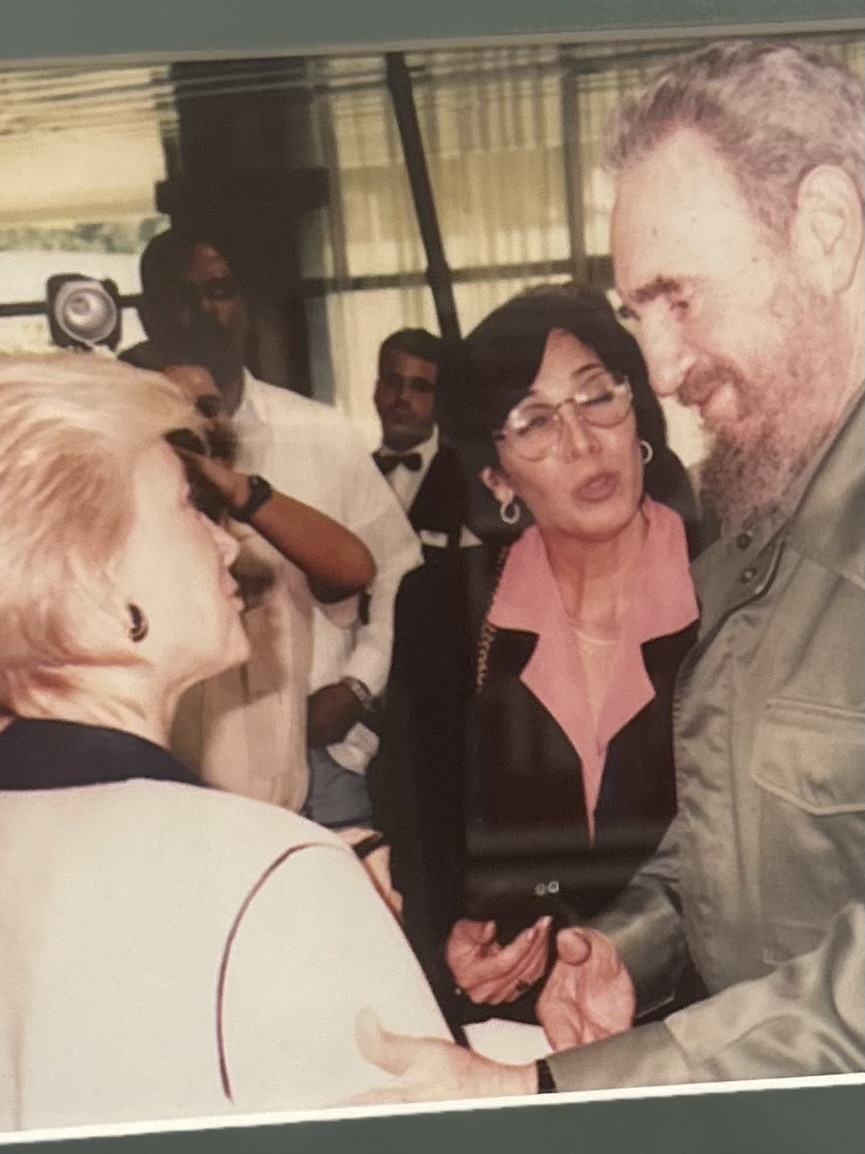
During that time, she came into contact with many prominent people. She says that Julia Child was a favorite because she was so entertaining. The most intriguing one was probably Fidel Castro. This interview came about when the American Society of Newspaper Editors (ASNE) sent a team of newspaper editors to Cuba to persuade the island dictator to allow the Associated Press to establish a bureau in Havana. Rena flew there with the group of editors. She remembers that Castro kept the editors waiting and then talked for six hours straight. Rena laughs about it now, but he talked so long that she ran out of pages in her notebook and had to pull out her checkbook and start taking notes on it. She didn’t want to miss anything newsworthy he might say, she says.
Margaret Thatcher was another person she found to be fascinating. Rena once moderated a luncheon in Dallas where the former British Prime Minister was the featured guest. As the event was winding down, Rena asked her whether it was true that she slept only three hours a night when she was prime minister. She said, “Sometimes – but I’m leading the easy life now.” The next morning, Rena arrived at The News for a staff meeting at 8 am. The security guard told her that a very distinguished lady had dropped off a note for her about 6 a.m. In her office chair, Rena found a note on stationery “about a quarter-inch thick,” handwritten by Ms. Thatcher herself, saying thanks for her hospitality. Rena was impressed -- the “Iron Lady” still got up early.
Another interview that she cherishes was with Nobel Peace Prize winner Aung San Suu Kyi, who inspired Burma’s (now Myanmar) first steps towards democracy. Rena says that this woman was the most impressive person she has ever interviewed. This encounter was the springboard for Rena’s well-received book The Burma Spring.
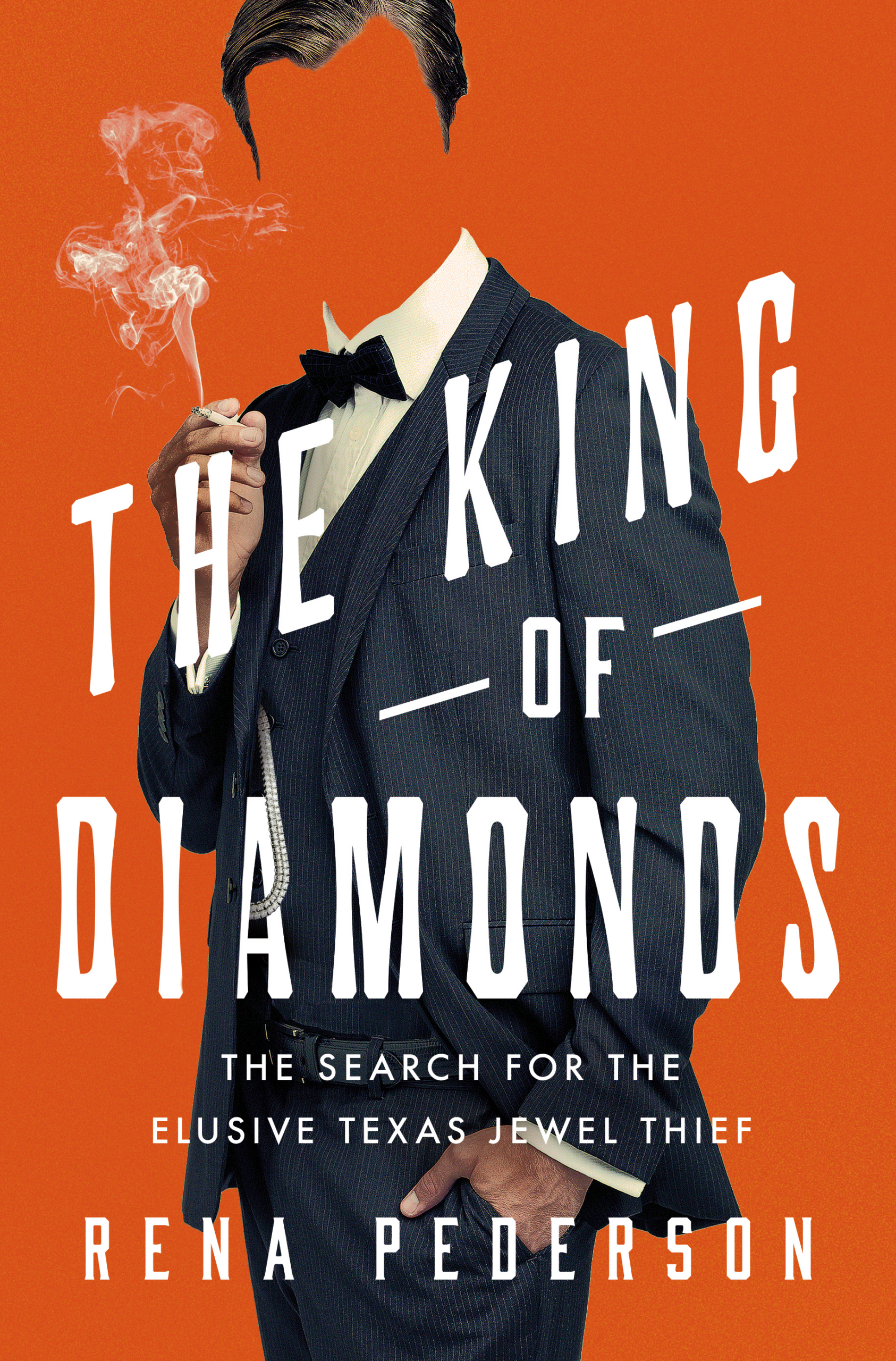
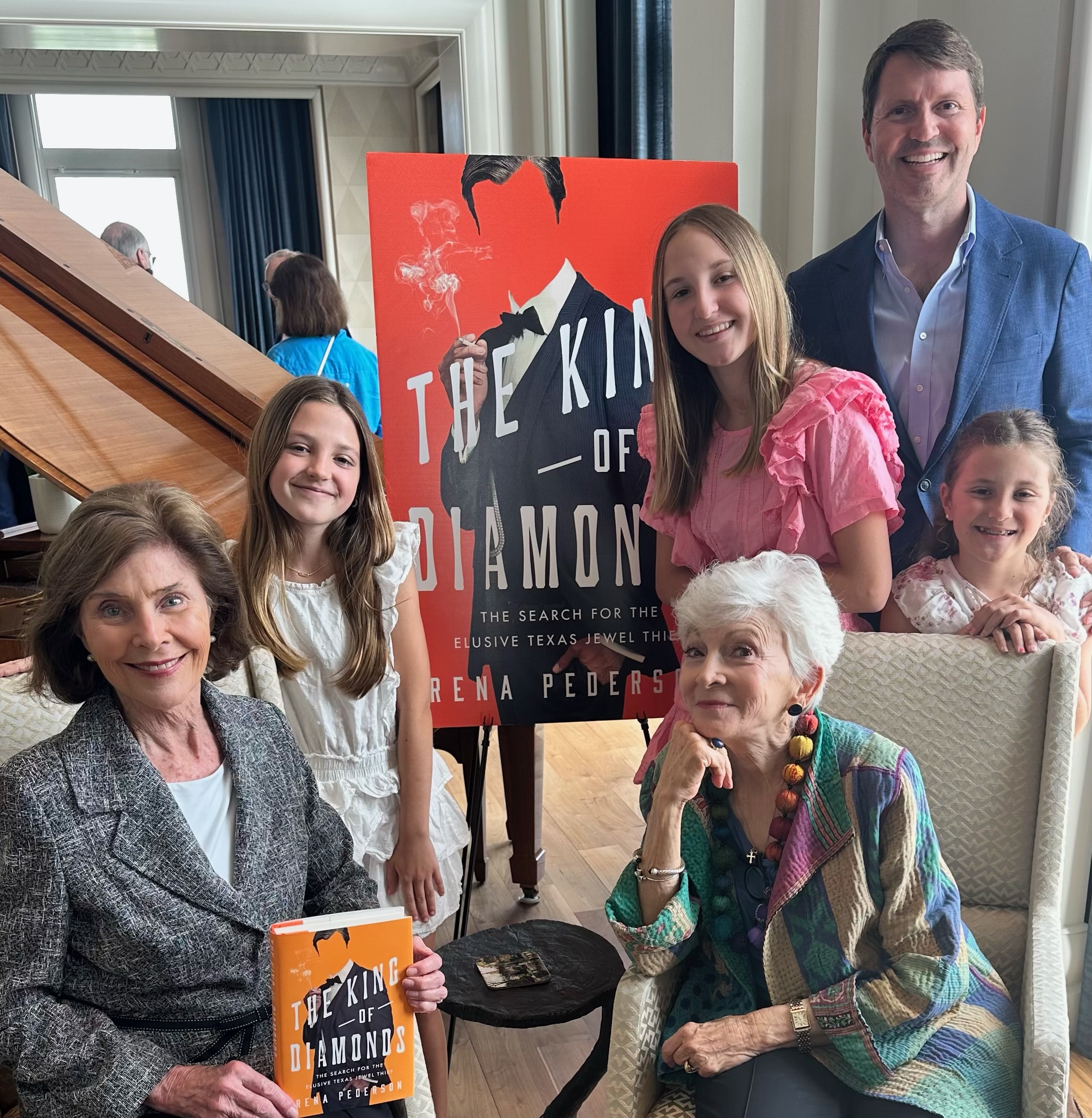
Now, about The King of Diamonds, Rena’s latest published book, which has been a touchstone for controversy and gossip in high society in Dallas and around the country. In case you haven’t heard of this book, it is based on the true story of the jewel thief who plied his trade in the most exclusive Dallas neighborhoods from 1955 to 1970. He worked with surgical precision, often sneaking into houses when he knew that the owners would be attending a ritzy function. He also knew exactly where the most valuable jewels were hidden. Sometimes he would break into a home when the residents had just returned from a formal affair, and he knew that fine jewelry would be left out in the open.
Rena started the book in 2015 and spent the next seven years working on it. It covers several possible characters who could have been the thief, but she rules them out one by one until she narrows it down to a person from a prominent Dallas family. There are so many good parts -- one vignette I liked was when a woman hosting her friends for dinner hears the thief upstairs telling the family dog to be quiet, calling it by name.
She has enjoyed the response that the book is receiving. In fact, “King of Diamonds” parties are popular in Dallas now. At one of these events, a couple came in dog costumes, because they were the dogs that didn’t bark. For another of these events, a husband came dressed as a debutante in a white ballgown, while his wife wore a Hershey’s outfit, pretending to be stripper Candy Barr, who features in the book.
“The mystery turned out to be very psychological,” Rena says. Who would break into the homes of people they knew? And sometimes it seemed to be vindictive—on one occasion, he took only one of a pair of earrings, spoiling the set. Rena consulted with a psychologist at SMU, and she learned a lot about people with sociopathic personalities. In her mind, the Dallas thief was probably the best jewel thief in the country—and he was never caught. Now there is interest in making a movie based on the book, and Rena has some significant Hollywood figures interested in signing on for the project.
“How lucky am I to have had all this fun?” Rena says. And her next book may keep the buzz going.