

By Meg Rein, Friends of Reed Park
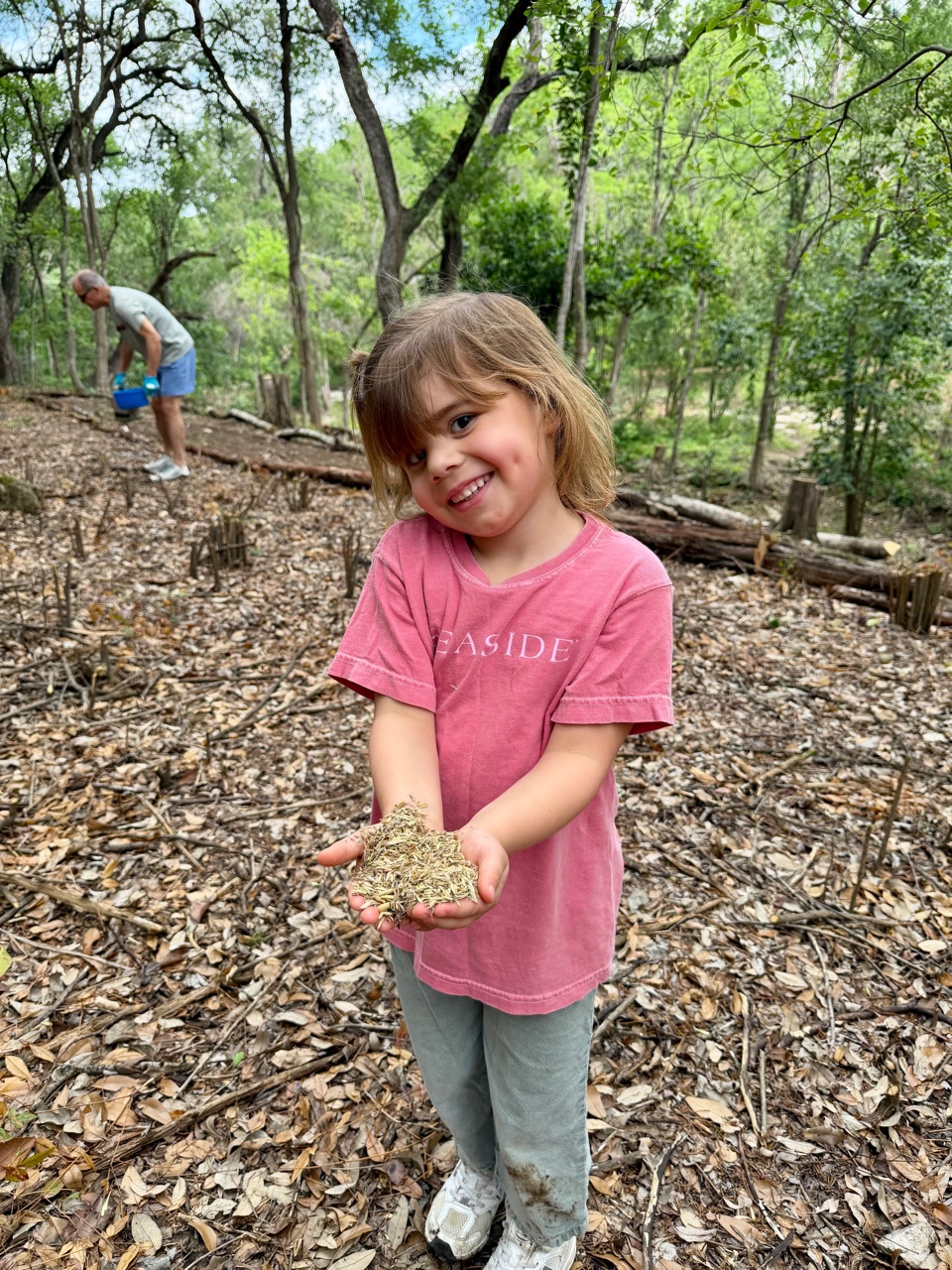
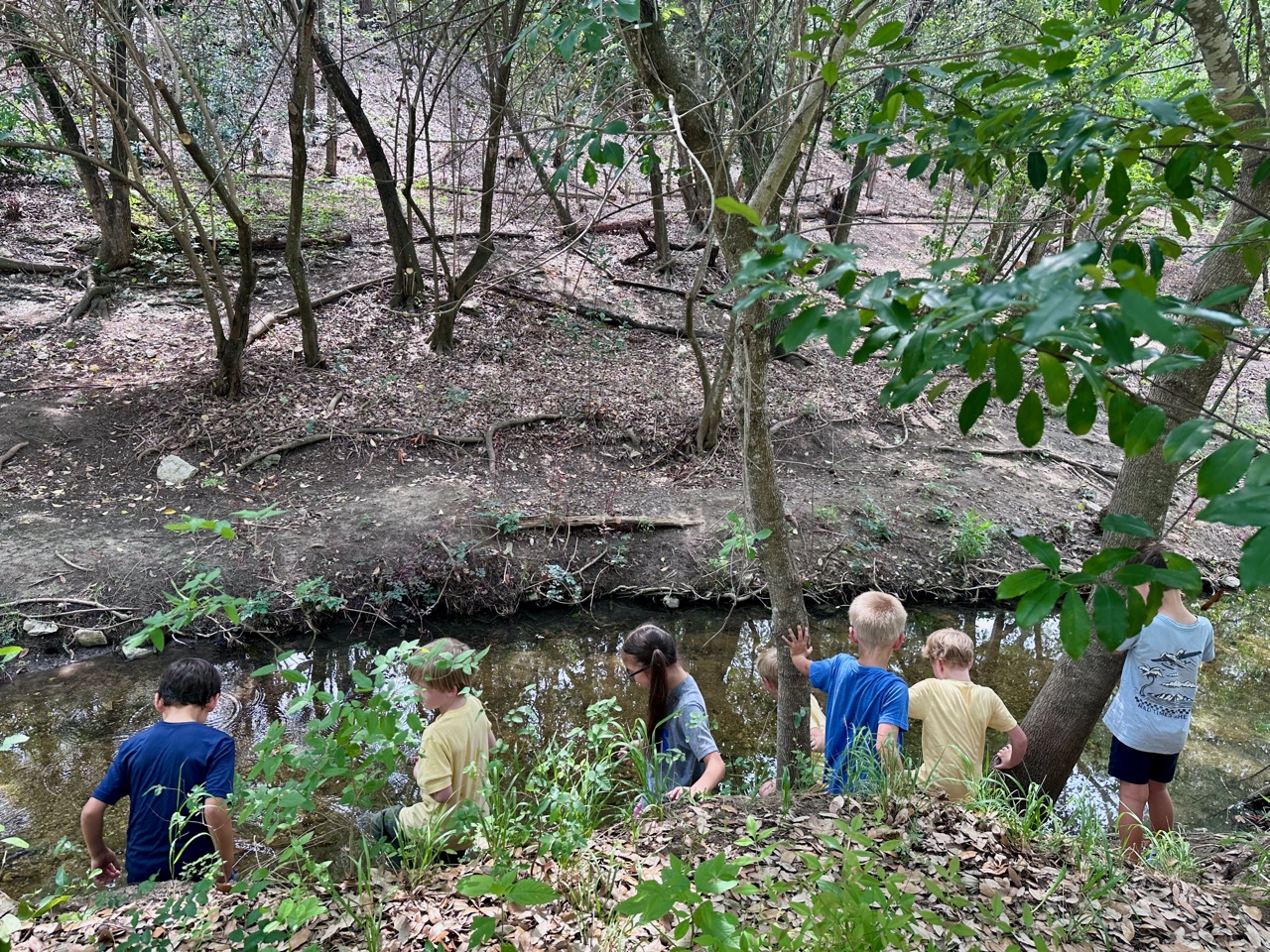
Spring has come to the neighborhood, and many neighbors will have noticed an uptick in activity at Reed Park. In February, beautiful new Mexican sycamore trees were planted along the playground. One of them already holds a bird’s nest. In March, a crew was at work removing invasive plants along the sloped ground behind the ball field, parts of the creek, and the playground. The smell of freshly cut mulch drifts over the hillside now, as volunteers have been spreading it around trees and along paths, and scattering native plant seeds in the newly cleared areas.
The work being done at the park has been organized by Friends of Reed Park (or “FORP”), a 501(c)(3) nonprofit dedicated to the care and maintenance of the park, in coordination with the City of Austin. In recent years, FORP has advocated for needed maintenance and care at the park, and for preserving the peaceful, natural character that makes Reed Park so special to the neighborhood.
Urban Forest Grant funds
Last fall, FORP applied for and won an Urban Forest Grant in the amount of $70,500, for invasive species removal and habitat restoration work at the park. Urban Forest grant funds are earmarked for work on City-owned property to enhance the long-term health of Austin’s urban forest. FORP applied for the grant in consultation with the City of Austin and well-known local landscape architecture firm Campbell Landscape Architecture, led by Cameron Campbell, a landscape architect and resident of Tarrytown who has donated time and expertise to park restoration efforts.
Now, the grant funds are being put to use. After a bidding process, FORP hired Maas Verde, a local company specializing in landscape restoration and vegetation management, to remove the invasive species—including ligustrum, nandina, photinia, privet and poison ivy—that were choking the sloped, wooded hillside on the back 3.25 acres of Reed Park.
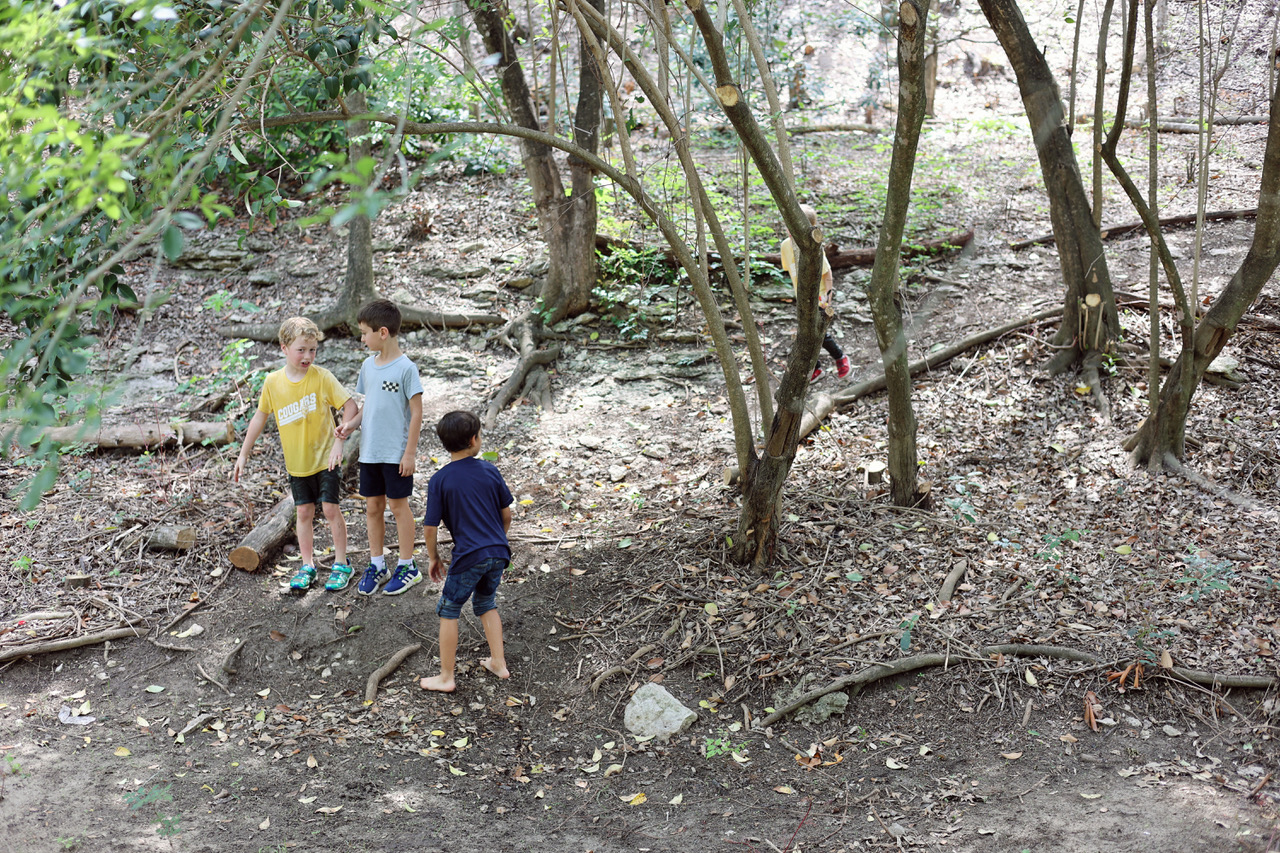
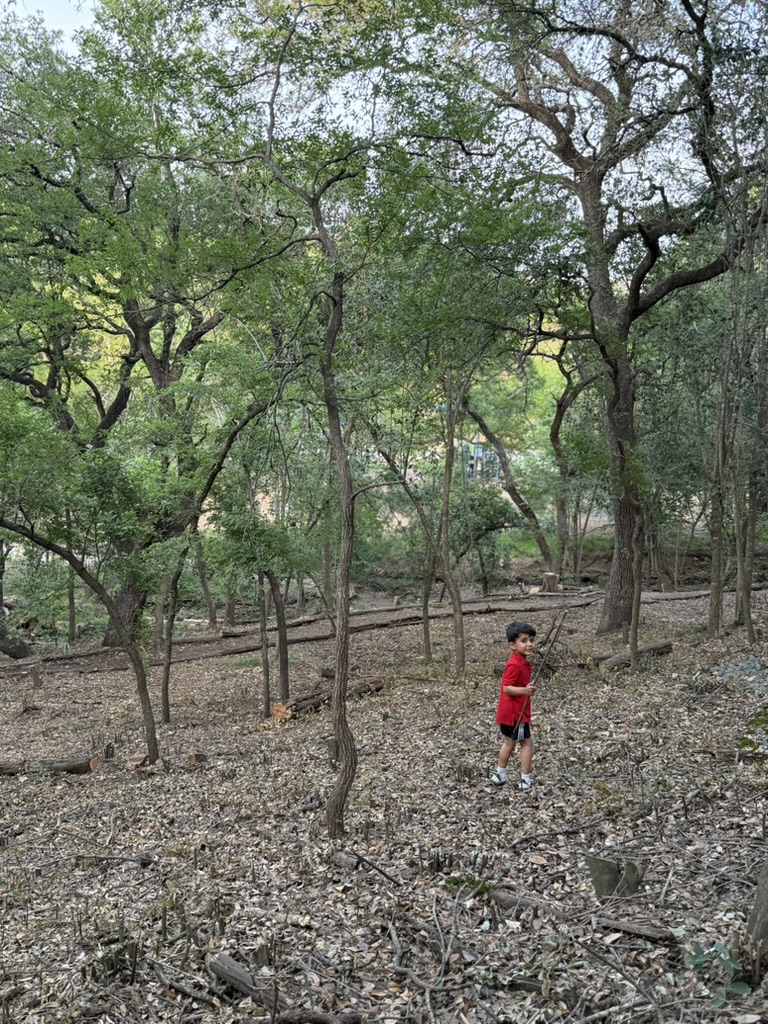
Unlike volunteer laborers, Maas Verde’s professional crews are able to girdle invasive plants where feasible to discourage regrowth, and to apply targeted herbicides that are environmentally safe and City- approved. The crews put the removed invasives into a wood chipper to create mulch to be spread along trails and around native trees as a tree ring for their long term health. The crews left a 40-foot buffer of vegetation at the top of the hillside, at the request of park neighbors for privacy purposes, but otherwise have made noticeable progress clearing the hillside of invasive plants.
Why Remove Invasives?
Seeing almost $80,000 put to work in the park is exciting, but also begs the question: are invasives really the most pressing problem at the park? Why is this work so important? Adam Blanton is a native Texan and the owner of Blanton’s Nursery, where he grows native trees and woody shrubs from seed. As an expert in this field, he explained a few things that casual park users may not know. Adam acknowledges that seeing trees cut down in a park may be unsettling, but explained, “this is not a destructive act, but the first necessary step in a long-term plan to restore our park into a thriving, native ecosystem.” He went on: “Think of it like owning a home. When you first move in, everything might look fine. But if you neglect regular upkeep—like fixing a leaky roof or managing overgrown landscaping—small issues become big problems. Over time, the property falls into disrepair. Our park has experienced a similar kind of ecological neglect. Over the years, invasive trees have taken over. While they are green and appear healthy, they choke out native plants, reduce biodiversity, and create a fragile landscape that cannot sustain itself.”
Adam stresses the crucial importance of native tree species in supporting a local ecosystem. He explains, “native trees are host plants to native caterpillars, which in turn become native butterflies. Many species of birds rely on caterpillars as their primary food source. When we remove trees that don’t support native insects and replant with native trees, we start to rebuild the entire ecosystem from the ground up. Invasive trees simply do not serve this function. They may look like trees, but they are ecological dead ends.”
Of course, it is not enough to swap one species of tree for another. FORP has committed to planting a diverse group of plants in each specific area of the park, and this work is also underway. Using privately donated funds, FORP has planted new trees and spread thousands of dollars worth of native seed in the park. Adam says the diverse plantings “encourage not just plant diversity, but biological diversity as a whole” because they provide food and shelter for a wide range of insects, birds, and other wildlife. When the native plants bloom and fruit at different times, there is a steady food supply across the seasons.
As Adam says, “the result is a resilient, balanced ecosystem that can better withstand disease, pests, and a changing climate.” In other words, Adam and other landscape experts see the removal of invasive trees and plants, like those that had been steadily taking over Reed Park, as the hard but necessary work of clearing out the “rot” so the park’s forest can thrive. It is not the end of the park’s trees, but a chance for the native trees to have the resources they need. Eventually, as Adam explains, healthy and diverse native species in the park “will create a resilient, self-sustaining ecosystem that our community can enjoy for generations.”
Taking out the invasive species may make the hillside look bare for a time. But in a few short years, it will become much healthier and more beautiful than “the monoculture of invasives it is replacing,” Adam says.
FORP members have been proud to work in conjunction with the City on this project, and to see a large investment of Urban Forest funds poured into our own neighborhood park. The work will bear fruit for years to come and is part of FORP’s enhancement plan at the park, which it describes as “a neighborhood-driven vision to restore, beautify, and future-proof” this beloved neighborhood green space.
Attributions:
We’re proud to partner with the City of Austin’s Urban Forest Grant, who made this project possible. Learn more at AustinTexas.gov/ufgp.
Reach Adam at BlantonsNursery@gmail.com or on Instagram @blantonsnursery.
Friends of Reed Park is an all-volunteer organization. All funds raised go directly to the care and maintenance of Reed Park. FORP’s website is https://www.reed-park.org/ . Reach out to get involved or donate—your help and support is so appreciated.
Upcoming events at Reed Park include Kiln Fest on May 2nd (mark your calendars!) and the opening of Reed Pool on June 8. Contact City of Austin for details on Reed Pool’s swim team.