


Wallering Around in Austin’s History
By Martha Ann Hartzog
Here’s why I am calling my column “Wallering Around in Austin’s History.” Partly, it’s a tribute to Edwin Waller, the man who led the planning of Austin, and partly it’s a joke on me. All I ever seem to do is “waller” around in history, not just Austin history but just about all history. “Waller” is how we in Texas pronounce “wallow.” Like in “hog waller.” When you consult the dictionary, you see that “wallow” is a verb meaning to roll about or lie in; to luxuriate or revel in; to flounder about. That’s all I seem to do these days in the always-absorbing realm of what went before.
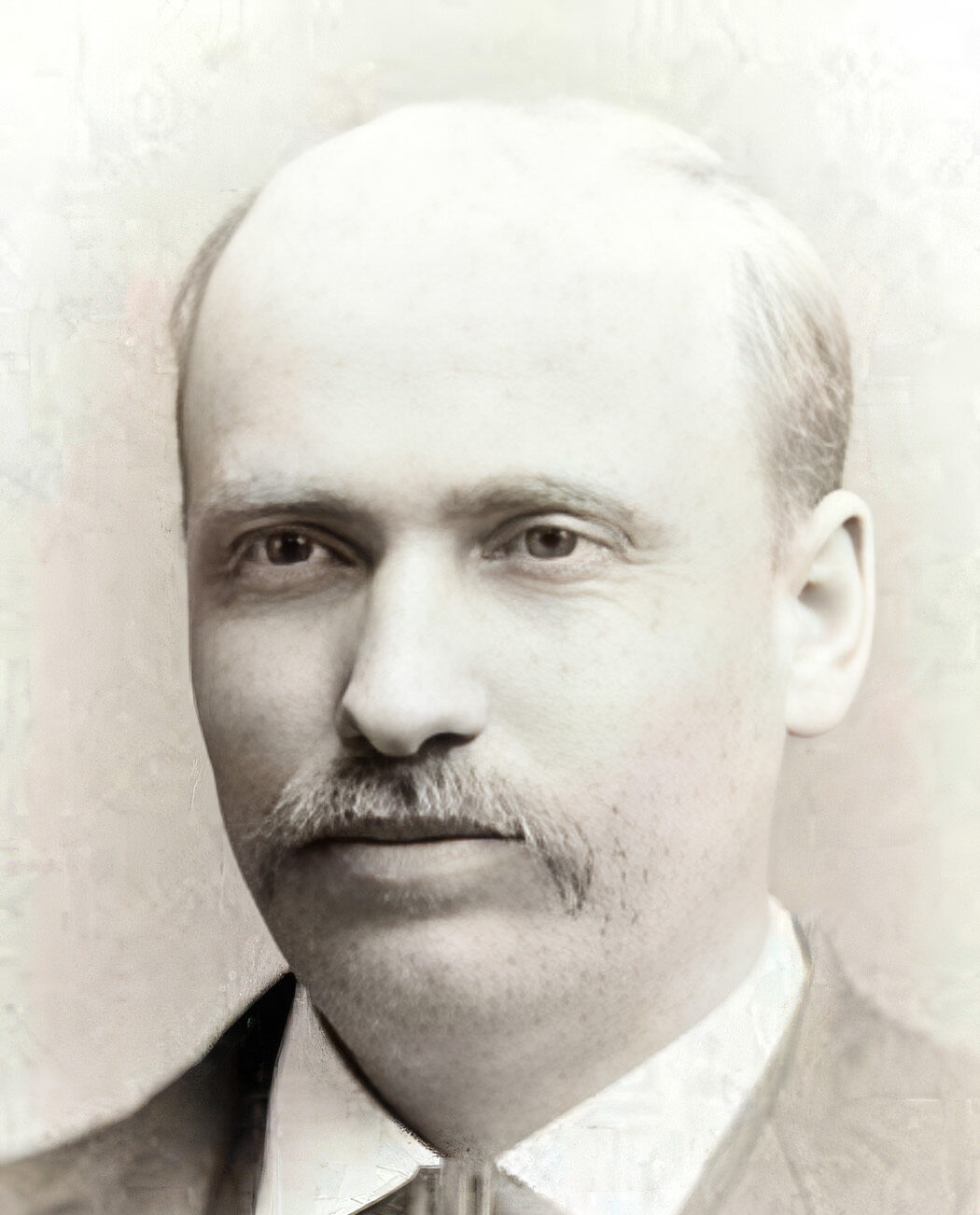
Who has heard of Johann August Udden? A name that doesn’t come trippingly off the tongue. Doubtless hardly anyone has heard about him— unless they are professionally trained geologists. But if you ever attended The University of Texas’ many campuses or those of the Texas A&M system, you are reaping the rewards of one of Udden’s most exciting achievements. “One” of his achievements should be emphasized, for he had many. In his time, he was called “The Nature King” because of his multiple discoveries in the fields of natural history and geology.
Wander to the south side of The University of Texas at Austin campus, below the stadium on MLK (originally 19th Street), and you run into a pumping oil well. It is called “Santa Rita No. 1.” Why in the world would The University of Texas put up this working replica? It has been there since the 1960s at least, when this author attended UT as an undergraduate. The booming sound effects that were emanating from this pumping marvel were fairly inexplicable to young ears.

The explanation to the faux oil rig is simple. It is an homage to the “Santa Rita No. 1” oil gusher located in Reagan County in far West Texas that blew in on May 28, 1923. This gusher gave The University of Texas System and Texas A&M the Permanent University Fund, the prodigious funding for their schools. At the time, these state-owned lands were considered relatively worthless. Without the geology research of Udden, the drilling would not have happened. Santa Rita #1 would not have happened.
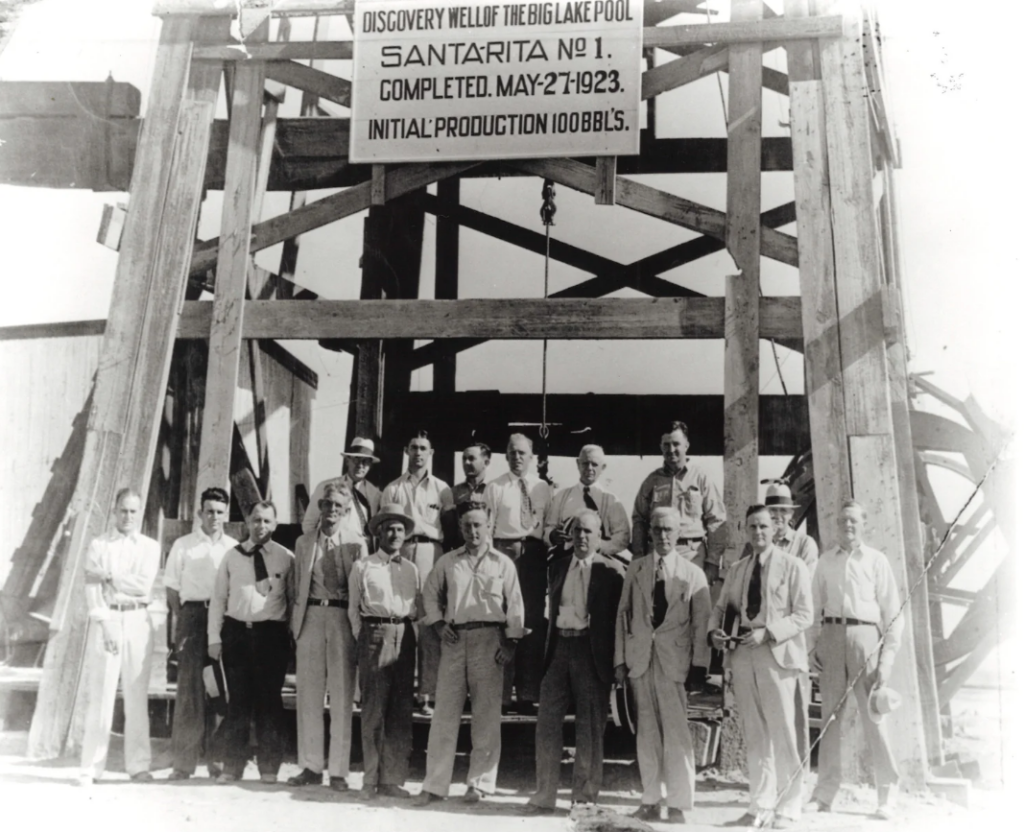
Most everyone has heard of “Spindletop,” the famous oil gusher that came in near Beaumont, Texas, on January 10, 1901, which marked the birth of the modern petroleum industry. But Spindletop was found largely by accident. “Santa Rita No. 1” was found through the research of Dr. Johann Udden. In 1916, Dr. Udden, then a geologist in the Bureau of Economic Geology and Technology at The University of Texas, began to assert that it was probable that oil could be found lying atop an underground fold of rock that was believed to run from the Marathon area, near Big Bend, through Pecos County and into Upton and Reagan Counties. In 1923, he was proved right. In homage to him and to Santa Rita, the replica oil rig was made and placed on the UT campus.
Why the name Santa Rita? Some of the salesman selling stock certificates in New York City to raise funds for the West Texas oil exploration encouraged a group of Catholic women to invest. Worried about the success of the venture, the women prayed to Santa Rita, the patron saint of the impossible. They gave Mr. Frank Pickrell, one of the partners responsible for drilling the well, rose petals that had been blessed by a priest. Pickrell was directed to climb to the top of the derrick and sprinkle the rose petals over the rig. He did so. Did this intervention work? Who’s to say. But Santa Rita came in and was named for the patron saint.
Udden’s career of interesting discoveries began much earlier than 1923 and Santa Rita. Johann Udden was a brilliant and largely self-taught natural scientist with wide ranging interests. He had an original mind, and one contemporary observed that “had he gone through the mill of scholastic training, . . . his insight might have been blunted.”
Udden was brought to the United States from Sweden in 1861 at the age of 2 years by his parents who settled in Minnesota and began farming. His father died at the age of 42 and Udden and his brother had to help their mother keep the farm together. She was determined that her two sons receive an education and both graduated from Augustana College in Illinois. After graduation in 1881, Udden embarked on a teaching career. This took him first to Bethany Academy in Lindsborg, Kansas.

While a teacher at Bethany Academy, Udden conducted an 1883 archeological excavation at Paint Creek American Indian mounds near Lindsborg. There he discovered a piece of chain mail, undoubtably left by the Coronado Expedition of 1540-1542, which also famously traveled through West Texas. At the same time, he also made trips out into the Kansas countryside to collect flora and fauna to assist with the classes he was teaching. His abilities to observe and catalogue the natural world were being developed. By 1887, Udden had determined to study geology. Ultimately, he returned to Augustana to teach geology and from there in 1911 to The University of Texas at Austin. His interests extended to paleontology, archeology, fossils, and microfossils.
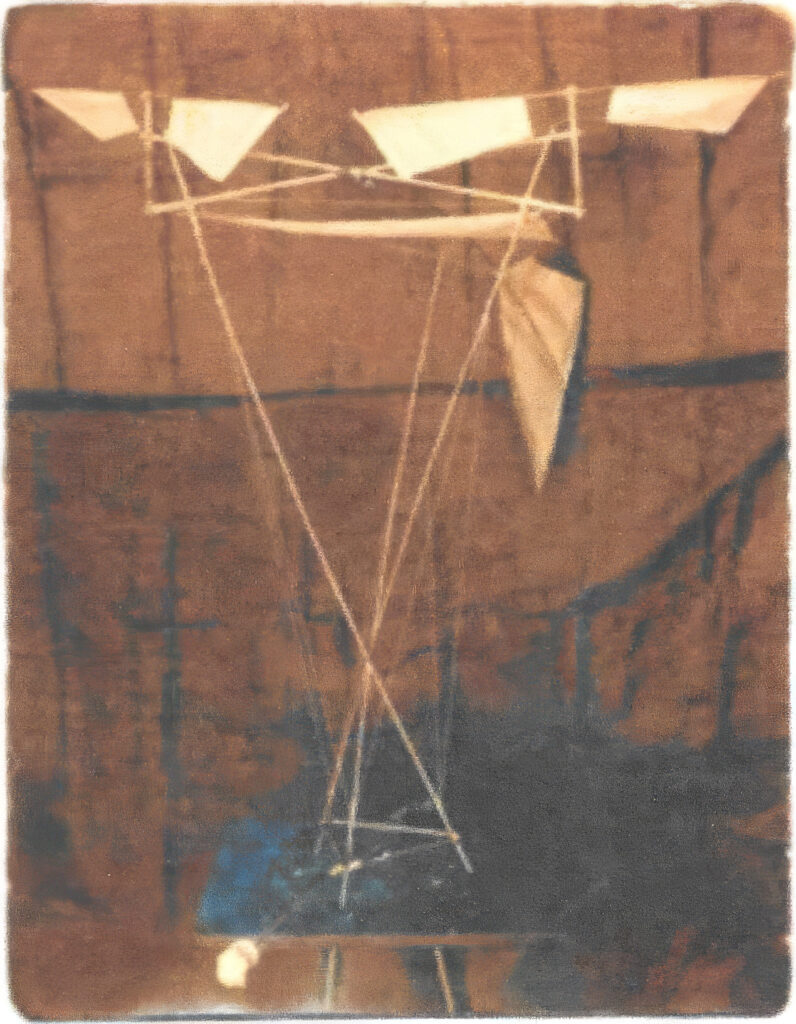
But at the turn of the century, before Udden arrived at The University of Texas, he embarked upon another startling discovery: a flying machine. He called it a “rotopter.” The amazing invention was the early prototype for a helicopter. Correspondence about the design of a flying machine exists between Udden and Orville Wright at the Library of Congress. A small model of Udden’s rotoper was built and flew in a trial in 1908. Udden did not pursue the idea, however, and other inventors worked on it. A helicopter was finally perfected in 1936.
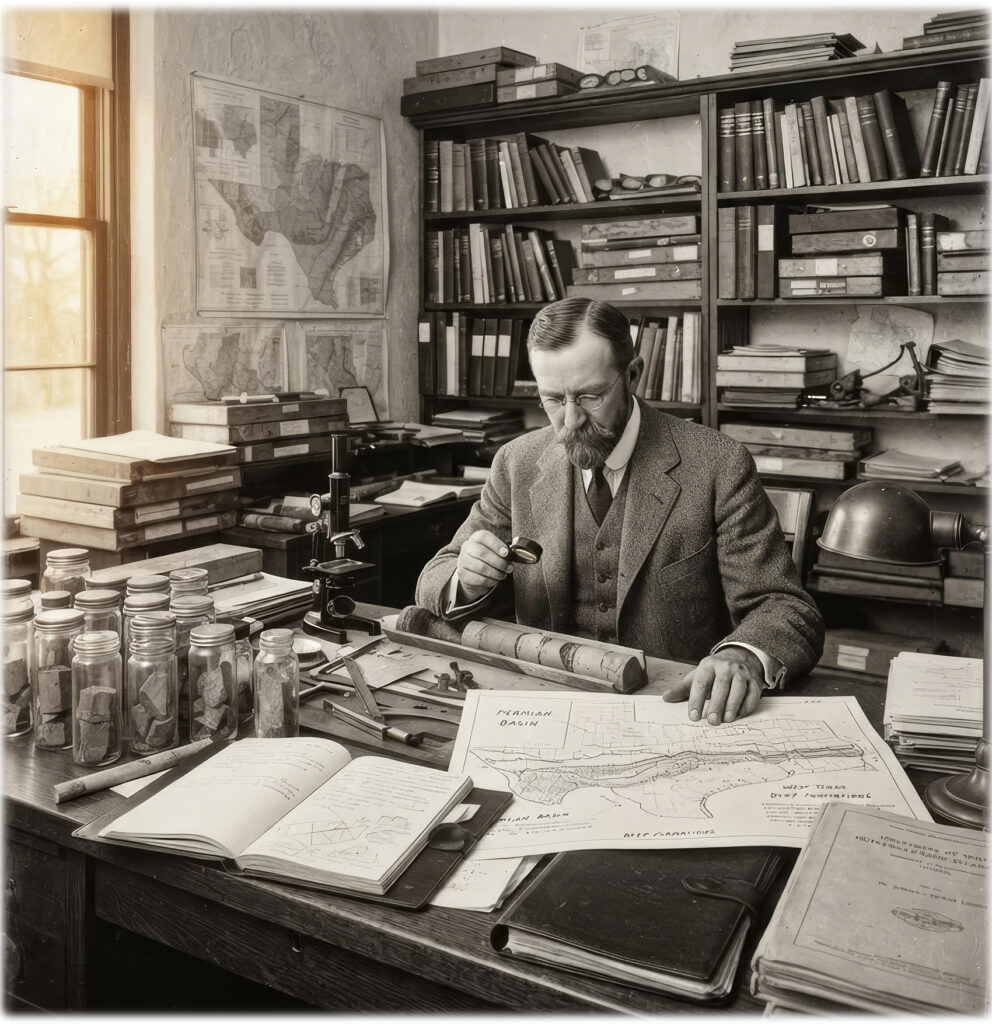
At The University of Texas at Austin, Udden became a geologist in the Bureau of Economic Geology and Technology. By 1915, he was its director, a position he held until his death in 1932. In West Texas Udden began studying fossil formations and seismic patterns. His work led him to discover the Permian Basin oil and gas fields on state land in West Texas. Ta dah!— Santa Rita No. 1!! Many other achievements could be recounted here, including his insistence that the State of Texas should have its own natural history museum, which a few years after his death resulted in the Texas Memorial Museum on the University of Texas Campus. But we must now leave Udden’s many scientific accomplishments and move on to the house he and his wife Johanna Christina Uden (in her name!) purchased in 1919, to highlight another charming older neighborhood in Austin.

Johann and Johanna Uden’s beautiful Prairie Style House with an Arts and Crafts interior sits in the area between Guadalupe and Lamar. It was built 1914-1915, and the Uddens were only the second owners. It has a City of Austin Historic designation. The neighborhood was once called “Penn Place” by the developer, Ada Caroline Read Penn. Ada Penn intended that University of Texas faculty members and their families would occupy the area and that dream was mostly realized. (Ada Penn, as an early female land developer, will be a subject for a future article.)
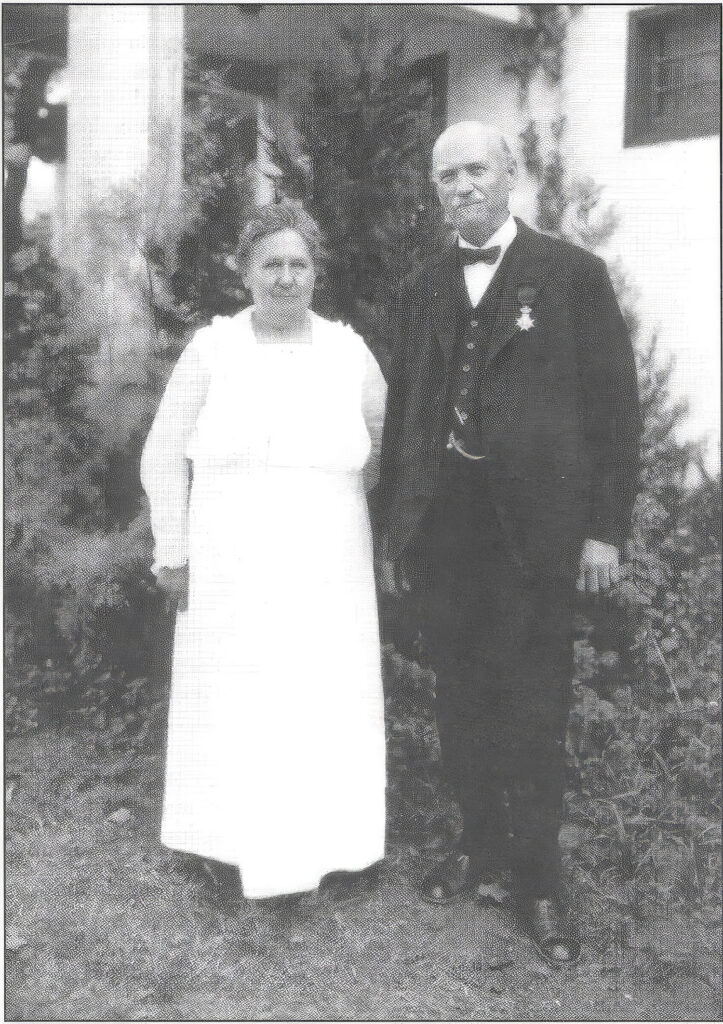
In 1911, for his many contributions to science, Udden was decorated by the King of Sweden with the Swedish Order of the Northern Star. Naturally, he received many other honors during his long career. In 1938, “Texans of Swedish Descent” placed a plaque to him in the Geology Building at The University of Texas. A mentor to others, generous with his support and advice. Udden was someone who enriched the world materially, intellectually, and spiritually. His house still sits proudly in “Penn Place.” Thank you, Johann Udden, for your literally ground-breaking ideas!
Sources:
Endres, Donna, materials and photographs provided by her and conversations with her, October 2026, at the Manning-Udden-Baily House.
Endres, Donna. “The Manning-Udden-Baily House at 901 W. 31st St., TX 78705,” monograph submitted to the City of Austin for an historic designation, 2005.
The Kansas Anthropologist, Journal of the Kansas Anthropological Association, edition dedicated to Dr. Johann Udden, Vol. 23, 200.
Simonds, Frederic W., “In Memoriam: Johan August Udden,” copy of obituary given after his death in 1932, in the files of Donna Endres.
“Why Santa Rita?” The University of Texas System, downloaded October 18, 2026.
Widen, Carl T. Untitled monograph about the life of Johan Udden, written on the occasion of the plaque placed July, 1958, in the University of Texas Geology Building on the 100th anniversary of the arrival in Texas of the first pioneers from Sweden, in the files of Donna Endres


